Dog blog: dog language, stress and training
Every article here is written by dog behavior consultant Amee de Bruijn, based on the material in the Stressless Dogs courses: the answer first, without force or punishment. Start with the pillars: dog body language, signs of stress, separation anxiety, puppy training and walking without pulling.
Dog language and stress
How your dog talks to you, and how to answer

Dog barking at people walking by or at the window: how do you stop it?
A dog that barks at people walking by is warning you or trying to create distance, and he practices that every day at the window. So you change the situation and lower the stress first, and only then do you train.

Is My Dog Scared of Other Dogs? How to Recognize It and Help Him
A dog who is afraid of other dogs mainly wants distance, even when he barks or lunges and looks tough. How to recognize that fear, where it comes from, and what to do and not do.

Anxious or Insecure Dog: How Do You Help Him (and Can You Comfort Him)?
An anxious or insecure dog is not disobedient; in that moment he literally cannot listen. How to recognize fear, why comforting him is fine while ignoring or forcing him is not, and how to give your dog more safety step by step.

What does it mean when a dog wags its tail? Is he always happy?
A wagging tail tells you how aroused your dog is, not whether he is happy. You will learn how to read the emotion underneath from the rest of the body and the situation, and how to help your dog when the arousal gets too high.

Dog scared of fireworks and thunder: how to prepare him now
A dog who is scared of fireworks or thunder is not being disobedient, he literally cannot think straight. What you can build in the weeks before, and why practicing with sound alone is not enough.

How to stop a dog from jumping up without punishment: why kneeing and pushing away do not work
Jumping up is natural greeting behavior, not dominance. A knee or a push makes it worse and can injure your dog. What sits underneath the jumping, and what actually works.

Dog wild or barking when visitors arrive: how to keep him calm
The doorbell is the starting gun: the moment your dog hears it, the tension is already building and calm behavior is no longer realistic. So you change the situation first, and your dog second.

Dog Body Language: How to Read What Your Dog Is Saying
Dogs talk all day long, just not with sound. You will learn the four groups of signals, how communication escalates from quiet to loud, and the six techniques to answer your dog with your own body.

My dog growls: what is he saying?
Growling never comes out of nowhere: it is the loud version of signals your dog already gave you, and the last warning before he snaps or bites. You learn why you never punish a growl, and what to do instead in seven everyday situations.

Why Does My Dog Yawn So Much?
A dog who yawns while he is not tired is telling you something: this is tense, this is too much, or I am not looking for a fight. You will learn to read the difference per situation.

Why is my dog panting so much when it isn't hot?
Panting is how a dog cools down. But a dog who pants when it isn't hot and hasn't just been running is usually showing stress, fear or pain, and you can see the difference in his face.

Why Is My Dog Shaking?
Shaking can mean cold, pain or illness, and you rule that out with your veterinarian first. But very often shaking is an expression of fear, stress or arousal. You will learn to read the difference and how to help your dog.

Calming Signals in Dogs: How Your Dog Defuses Tension and What You Do With It
Lip licking, yawning, looking away, walking a curve: dogs have more than thirty calming signals they use to prevent conflict. Read them and you understand your dog. Use them yourself and your dog understands you.

Why does my dog bark? The 10 types of bark and what they mean
Your dog never barks for no reason. Every bark is a message with an emotion underneath, and you learn to recognize the ten types of bark by pitch, length and body language, plus what to do and what to avoid.

How Do You Recognize Stress in Dogs? The Signs Almost Everyone Misses
Stress in your dog does not show up as barking or pulling, but in the small signals that come first: lip licking, yawning, looking away, whale eye, freezing. You will learn to read the body language from small to large, with the traffic light we use in our courses.
Separation anxiety
Why a dog cannot be left alone, and how to build it up

Separation anxiety in dogs: 7 treatments compared (and why most of them fail)
Radio on, a crate, one minute longer a day, tiring him out, ignoring, a second dog, medication: seven common separation anxiety treatments side by side. You get what each one does to your dog's stress, and what actually works.

Separation anxiety training plan: why standard schedules fail and how to build it up instead
One more minute alone every day sounds logical, but for a dog with separation anxiety that kind of schedule makes the problem bigger. This is the framework that does work, with the second-by-second ladder and the activity diary.

Sudden separation anxiety in older dogs: why your dog can no longer be left alone
A dog who was fine alone for years and suddenly is not has not turned disobedient. There is always a cause: pain, medication, aging, a full stress bucket, or a change at home. This is how you track it down.

How long can a dog be left alone?
There is no fixed number of hours that applies to every dog. What counts is whether his needs are met and whether he stays relaxed. Here is the guideline per age and situation, the needs test, and the camera check.

Separation anxiety in dogs: recognizing the symptoms and what to do about it
You recognize separation anxiety by behavior your dog only shows when you are gone, and by the stress that starts the moment you pick up your coat. Learn the symptoms, the three underlying causes, and why lowering stress has to come first.
Puppy and adolescence
From the first weeks to the teenage phase

How long can you walk a puppy?
Until about 12 weeks a puppy does not go on real walks, after that the guideline is about 15 minutes a day plus 5 minutes per month. You will learn why time outside does not count toward that, why distance hardly matters, and how to tell it is getting too much for your puppy.

My dog eats everything on walks: should you take it away?
A dog who eats everything outside is not being disobedient: dogs are scavengers and explore the world with their mouths. Why taking things away often makes it worse, and what to do instead with safe, gross, and dangerous finds.

When can puppies leave their mom, and why is 10 weeks better than 8?
Most breeders send puppies home at 8 weeks, and we would rather see them stay until 10 weeks or older. You will learn what happens in those extra weeks with mom and the littermates, and what to do if your puppy comes home at 8 weeks anyway.
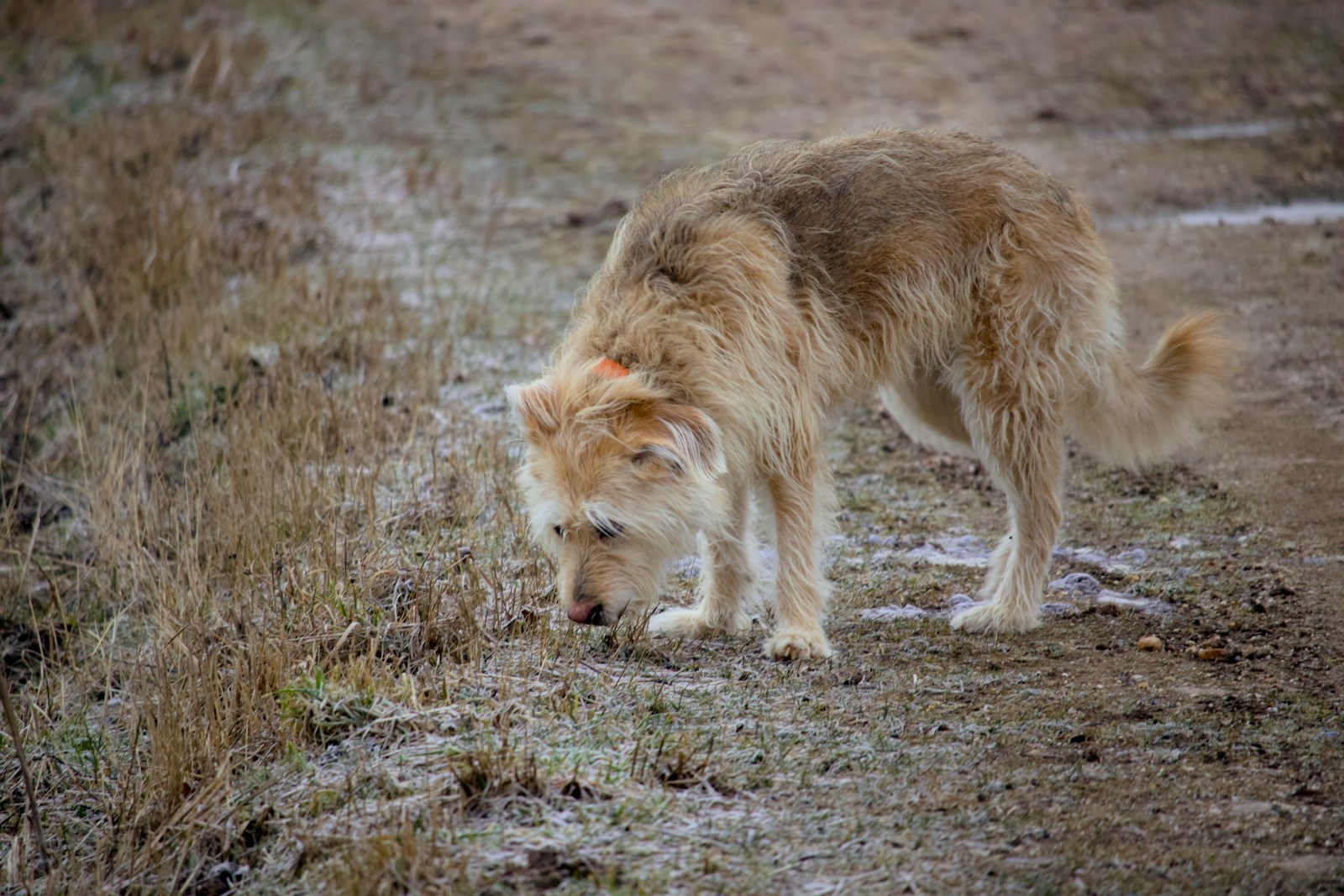
Fear periods in dogs: when do they happen and what do you do?
Your puppy or young dog is suddenly scared of things he already knew. That is usually a fear period: normal, healthy and temporary. You will learn at which ages they come, how to recognize them, and how to guide your dog through without the fear sticking around.

Teaching a puppy to be alone: when do you start and how do you build it up?
A puppy cannot be alone by nature. You learn why he is never left alone during his first three months with you, what you can prepare in the meantime, and why the real training starts around five to six months, in seconds and at your puppy's pace.

The first night with your puppy: how he sleeps (and you do too)
Your puppy has just landed in what feels like a foreign country, and you are the only familiar thing he has. That is why he sleeps in your room for the first nights, and not alone in a crate.

Online or in person puppy class: what fits you and your puppy?
An in person puppy class teaches your puppy in a training hall full of strange puppies; online you learn at home, at your puppy's pace, with coaching at a distance. Here are the differences side by side, plus the questions to ask every school.

When is a puppy potty trained, and how do you help him?
A puppy's sphincters only start to mature around thirteen weeks, and accidents are normal until about six months old. Here is the potty schedule by age, the things you never do, and the real causes behind a setback.

Crate training a puppy: why we advise against it and what works instead
A crate looks like the answer to rest, potty training, and chewed up furniture. But a closed crate takes away exactly the needs a puppy has to sleep and relax. Here is the kind alternative.

Why does my puppy bite so much (and how do you stop it)?
A puppy who bites is not being bad and does not love you any less. Biting is part of puppyhood, and the cause is almost always overstimulation and too little sleep. Here is what you see and what you do, per cause.

A dog in heat: how her behavior changes
The first heat usually arrives between six and eighteen months, and during those weeks your female dog may withdraw, get moody and lose concentration. You will learn what to expect in each of the four stages, how to support her, and when to call your veterinarian.

Dog adolescence: what changes and how you get through it together
From about six months on, your sweet puppy turns into an adolescent: more impulsive, quicker to get aroused, and with far less self control. You will learn the full timeline, what is happening in his body, and how to guide him through it without punishment.

Training a puppy without punishment: the four ways to guide behavior
The goal of raising a puppy is not a dog who performs commands, but a dog who trusts you. Punishment always damages that trust. These are the four ways you do guide behavior, in the right order.
Walking and reactivity
Calmer walks, and what to do when your dog lunges

My dog does not want to walk or keeps stopping: what is he saying?
A dog who stops or refuses to go on is not being stubborn. He is checking the environment for safety, or his stress bucket was already full before you left the house.

Y-shaped harness, collar, head halter, choke chain or no-pull harness: the overview
Six kinds of harnesses, collars and leashes side by side: what each one does to your dog's neck, shoulders and stress level. You will learn why the Y-shaped harness with a 10 foot leash is the only combination we recommend, and how to fit it.

Harness or collar: which is better for your dog?
On a collar, every bit of force from the leash lands on the neck, where the windpipe, the thyroid gland and the neck vertebrae sit. You will learn how to tell a good Y-shaped harness from a bad one, how to check the fit, and which leash belongs with it.

Why Is My Dog Lunging at Other Dogs (and What Actually Helps)?
A dog who lunges at other dogs is not aggressive and is not giving you a hard time. He is in distress and asking for space. The causes, why correcting and distracting backfire, and the foundation that does help.
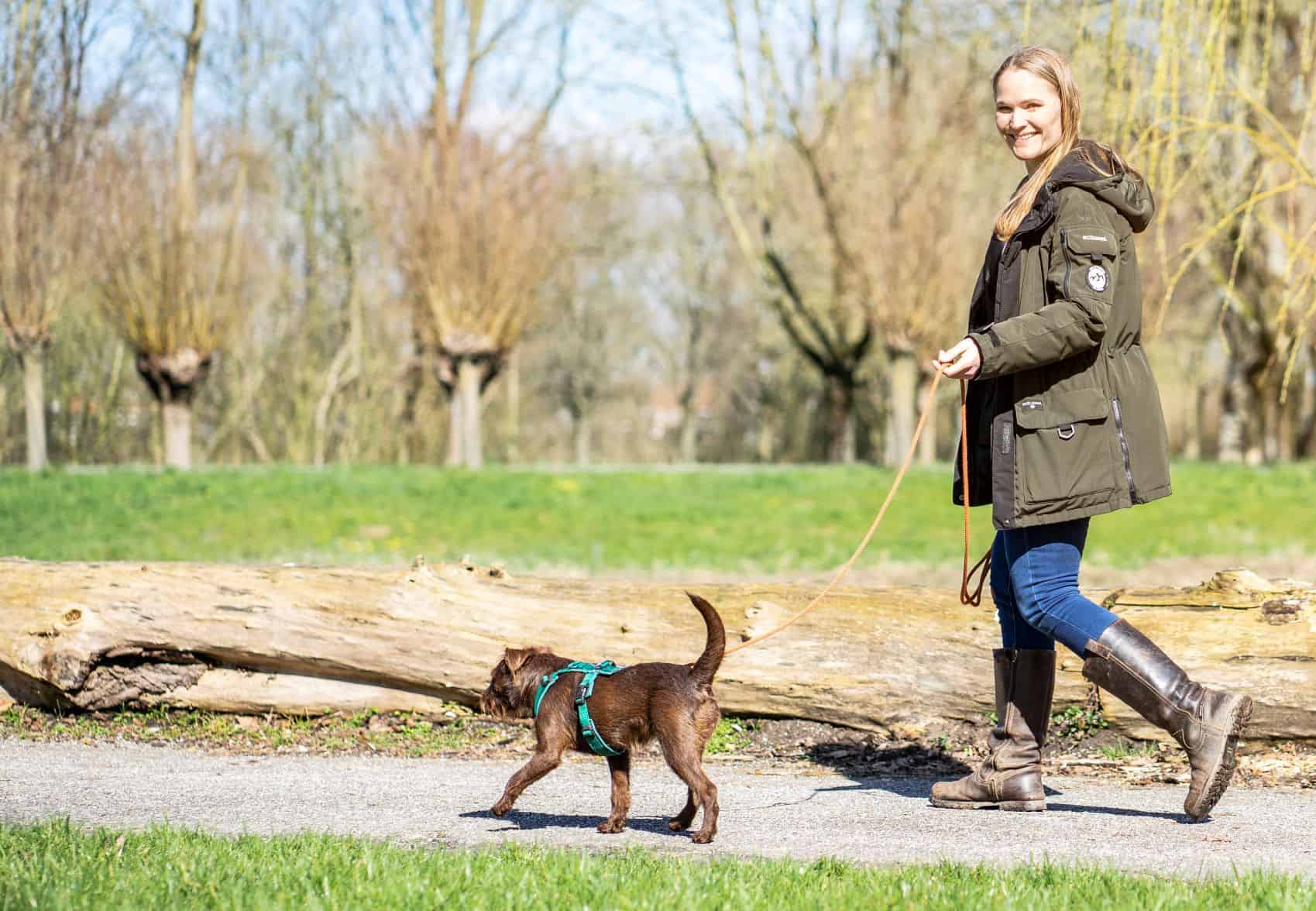
The 3 reasons why a dog pulls on the leash (and what you can do about it)
Before you can teach a dog to stop pulling, you need to know why he pulls, because each of the three causes calls for a different approach. You will learn how to recognize which one applies to your dog and the step by step method for walking on a relaxed leash.

Stress-Free Dog Walks: 3 Concrete Tips
Walking politely on a leash is one of the hardest things we ask of a dog. Three concrete tips that make the walk relaxed for both of you: free sniffing time, the find it game, and the long leash.
Natural living
Sleep, food, play and everything around the training

How much sleep does a dog need, and what if he sleeps too little?
A dog who sleeps a lot is usually doing exactly what he needs: a puppy sleeps and rests 16 to 20 hours a day, an adult dog about 12 to 16. Why too little sleep is one of the first signs of a full stress bucket, and when sleeping a lot is a reason to see your veterinarian.

The Dog Life Wheel: give your dog's life a score
How do you keep your dog in balance so that problem behavior never gets a chance to start? The Dog Life Wheel puts his six basic needs side by side: score each one, color in the wheel, and you see at a glance where the chunk is missing.

What Do Dogs Eat Naturally? How to Bring Variety to His Food
Free-ranging dogs sometimes eat as many as fifty different things in a day. Our dogs get the same dry kibble every day. Why variety, chewing and searching are basic needs, and how to arrange that on any budget.

How to Socialize a Dog: Why Friendships Work Better Than the Dog Park
Dogs are social animals, but social means living together with your own family and friends, not letting every strange dog into your personal space. Why the dog park often creates stress, how to recognize healthy play, and how to give your dog real friendships.
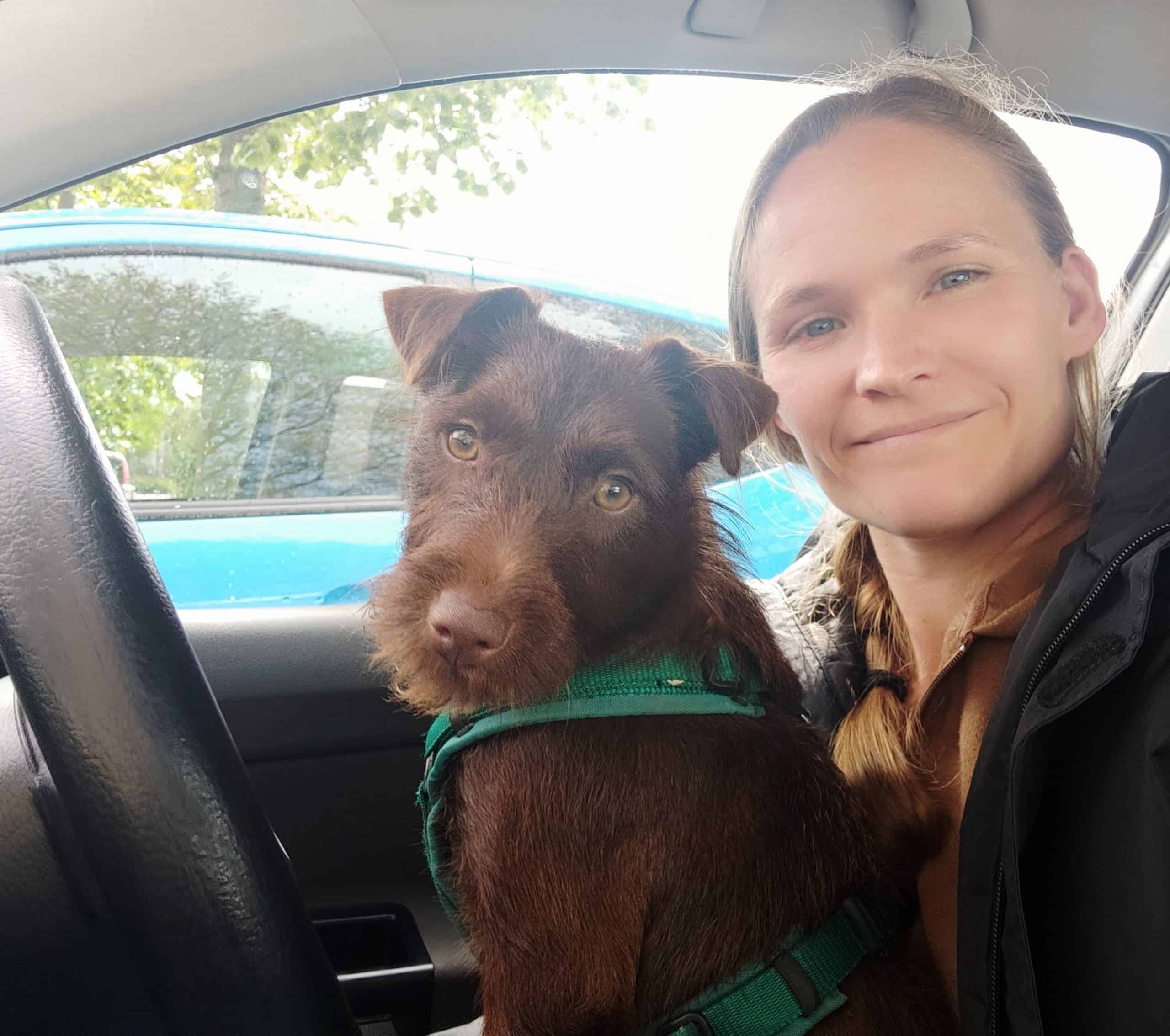
Traveling With Your Dog: The 3 Most Important Tips
On a trip, everything is different for your dog: the place, the smells, your rhythm. How we kept our few days away with Sophie relaxed, in three tips. Plus the answer to: can my dog stay alone in the vacation rental?