The 3 reasons why a dog pulls on the leash (and what you can do about it)
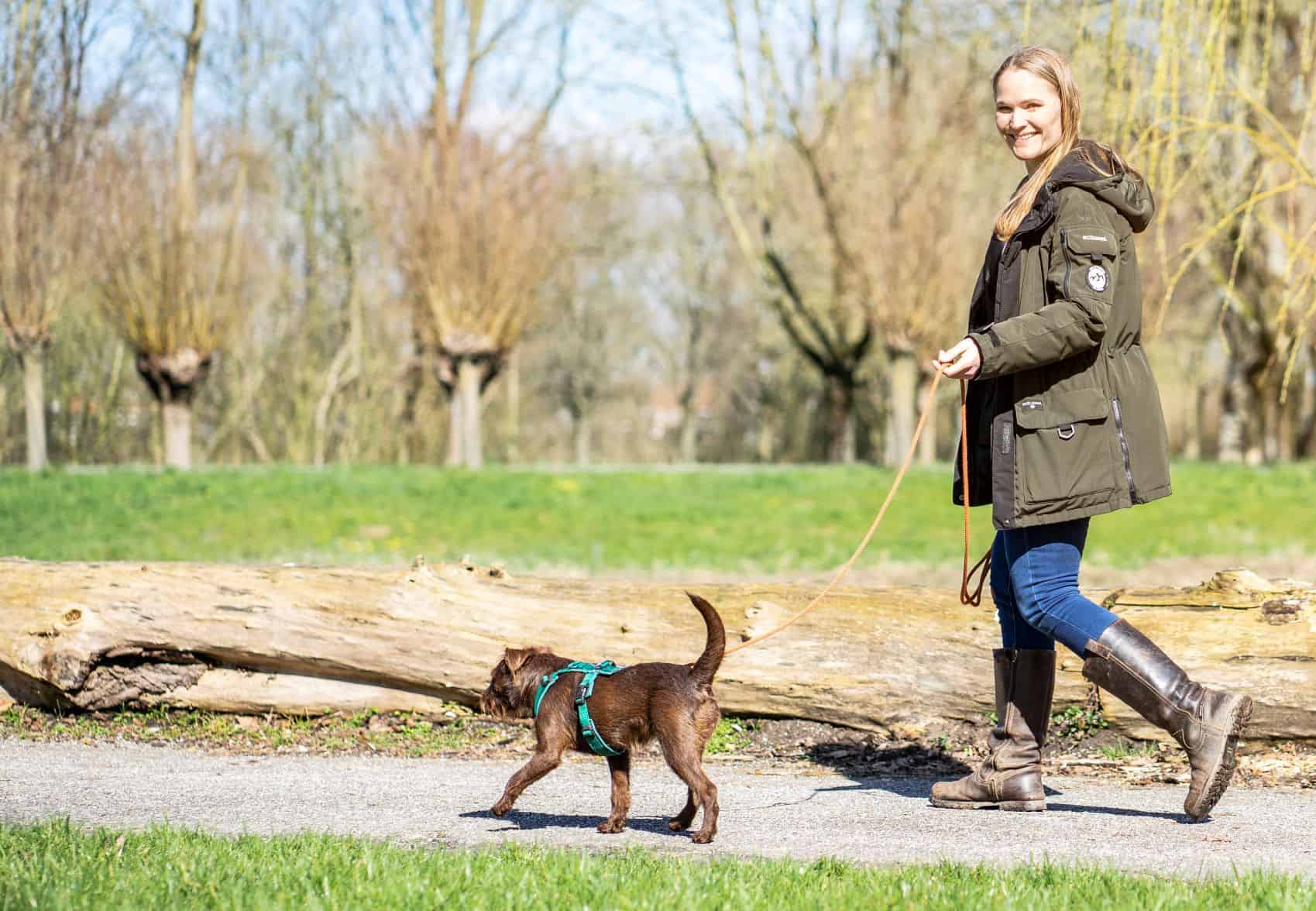
A dog pulls on the leash for three main reasons: a leash that is too short, stress and arousal, or because pulling once got him something and he has learned it. Which of the three applies to your dog decides the approach, and that is why teaching a dog not to pull never starts with an exercise but with looking. If he pulls because the leash is too short, a 10 foot (3 meter) leash solves most of it. If he pulls out of tension, the tension has to come down first. If he has learned it, you teach him step by step that walking only happens on a relaxed leash. Do you head out the door reluctantly for every walk because your dog hangs on the leash? Then this is the piece of information you need before you start training.
In short
Walking on a leash is a difficult, complex skill for a dog, not something that comes naturally.
Three causes: a leash that is too short, stress and arousal (including positive arousal), and learned behavior.
Pain and fear of earlier corrections are hidden causes you rule out first.
Address the cause first, train second; otherwise no method works.
Pulling can never be ruled out completely. Dogs are not robots.
The tension that causes the pulling is visible before the leash goes tight. Learn to read it in the free webinar.
The three causes at a glance
Cause | How to recognize it | What you do |
|---|---|---|
1. A leash that is too short | A leash of 3 to 6 feet (1 to 2 meters), or a retractable leash; the leash is nearly always tight, your dog cannot sniff anywhere without pulling | A fixed, light leash of at least 10 feet (3 meters) and a well fitting Y-shaped harness |
2. Stress and arousal | He bounces the moment you pick up the leash, zigzags, pants, pulls toward everything; or outside he is insecure and pulls back toward home | Look for the cause of the tension and empty the stress bucket; quiet places and quiet times |
3. Learned wrong | Pulling got him something (that great smell, that dog across the street), or he is used to a retractable leash where he has to pull | Teaching him that walking only happens on a relaxed leash: the stressless method below |
In summary: a dog pulls because of a leash that is too short (3 to 6 feet or a retractable leash), because of stress and arousal (bouncing at the leash, zigzagging, panting) or because pulling once got him something. The solution is a fixed leash of at least 10 feet (3 meters) with a well fitting Y-shaped harness, lowering the tension first, and then teaching him that walking only happens on a relaxed leash.
Two hidden causes belong with number two: pain (pulling or hanging in the leash can relieve pain; a rhythmic trot takes less effort than controlled walking) and fear of correction (jerks and angry words from the past make a dog want to be as far away from you as possible, and a choke chain or prong collar actively teaches a dog to keep tension on the leash, because a jerk on a slack leash hurts more).
1. A leash that is too short
In pet stores you almost never find leashes longer than 6 feet (2 meters); sometimes I see people with a leash of only 4 feet (1.2 meters). Because dogs naturally want to potter about and investigate with their nose, a leash like that is far too short. The moment your dog wants to sniff something, there is tension on the leash, simply because there is not enough room. The walk then produces frustration, for the dog and for you.
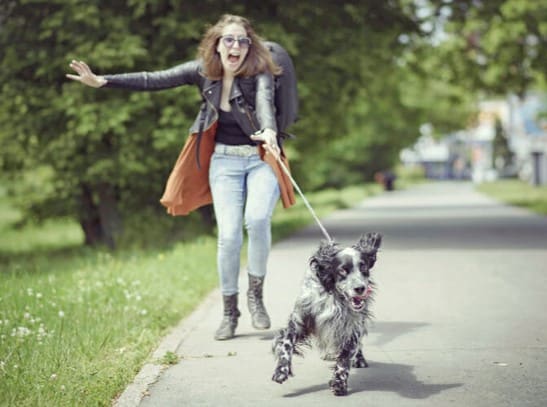
So always use a fixed leash of at least 10 feet (3 meters): the minimum length for relaxed sniffing and for being able to make an arc. Against expectation, a dog pulls less on a longer leash; in the French Dog Field Study by Cristina and Aurélien Budzinski, dogs on a 16 foot (5 meter) leash sniffed almost three times as long as on a 5 foot (1.5 meter) leash, and their heart rate dropped while they were sniffing. Which leash and which harness to choose is covered in Harness or collar.
2. Stress and arousal
Stress and arousal are emotions, and you cannot simply change an emotion. What we can do is investigate the cause underneath the emotion and change that. Even with “positive” arousal the body produces stress hormones; that is why a dog who is already bouncing at the sight of the leash walks outside bouncing from left to right. It can also be that your dog finds something outside frightening: then he produces stress hormones too, and those show up as pulling.
From my own experience: this week, while walking, I accidentally stepped on my dog’s toe. For the first ten minutes afterward she walked as far away from me as she could, and so she pulled quite hard on the leash. That is exactly what a correction does, only on purpose. Every jerk on the leash produces stress hormones and increases the distance your dog wants to keep from you.
So first check how full the bucket is: was it a busy day, did something exciting happen in the last half hour before the walk, is he coming off a ball game? If so, choose a short, quiet walk in a quiet place. How to read that tension in your dog is explained in Signs of stress in dogs.
3. Learned wrong
Walking on a slack leash is one of the hardest skills a dog has to learn, certainly on a short leash. It takes a great deal of effort to keep up with your walking pace (a dog’s average walking speed is higher than ours) and keep the leash slack at the same time, while what he actually wants is to sniff something or to move around something in an arc.
On top of that, your dog has often learned to pull because it got him something: he pulled toward that great smell and reached it, success. Or toward that nice dog across the street. And a dog who is used to a retractable leash has learned that you have to pull to get room. So many dogs have no idea at all what you expect of them on the leash; that really has to be taught.
How to teach walking on a relaxed leash
This is the stressless method from our course, and it only works once the cause (leash, stress, pain, fear of correction) has already been addressed:
Stand still the moment the leash starts to come under tension. Your dog learns to become aware of the tight leash and experiences that walking is not possible then.
Then change direction. Turn your body a quarter turn, hold the leash steady, wait patiently until your dog looks your way, take a step in the new direction and wait until he comes along on his own. Do not carry on straight ahead: then he pulls straight back toward the interesting thing.
Repeat this as a practice session. Crisscross a field or a square without a route; your direction is decided by what your dog does. In between, do go along with him when he wants to sniff, as long as the leash is not tight.
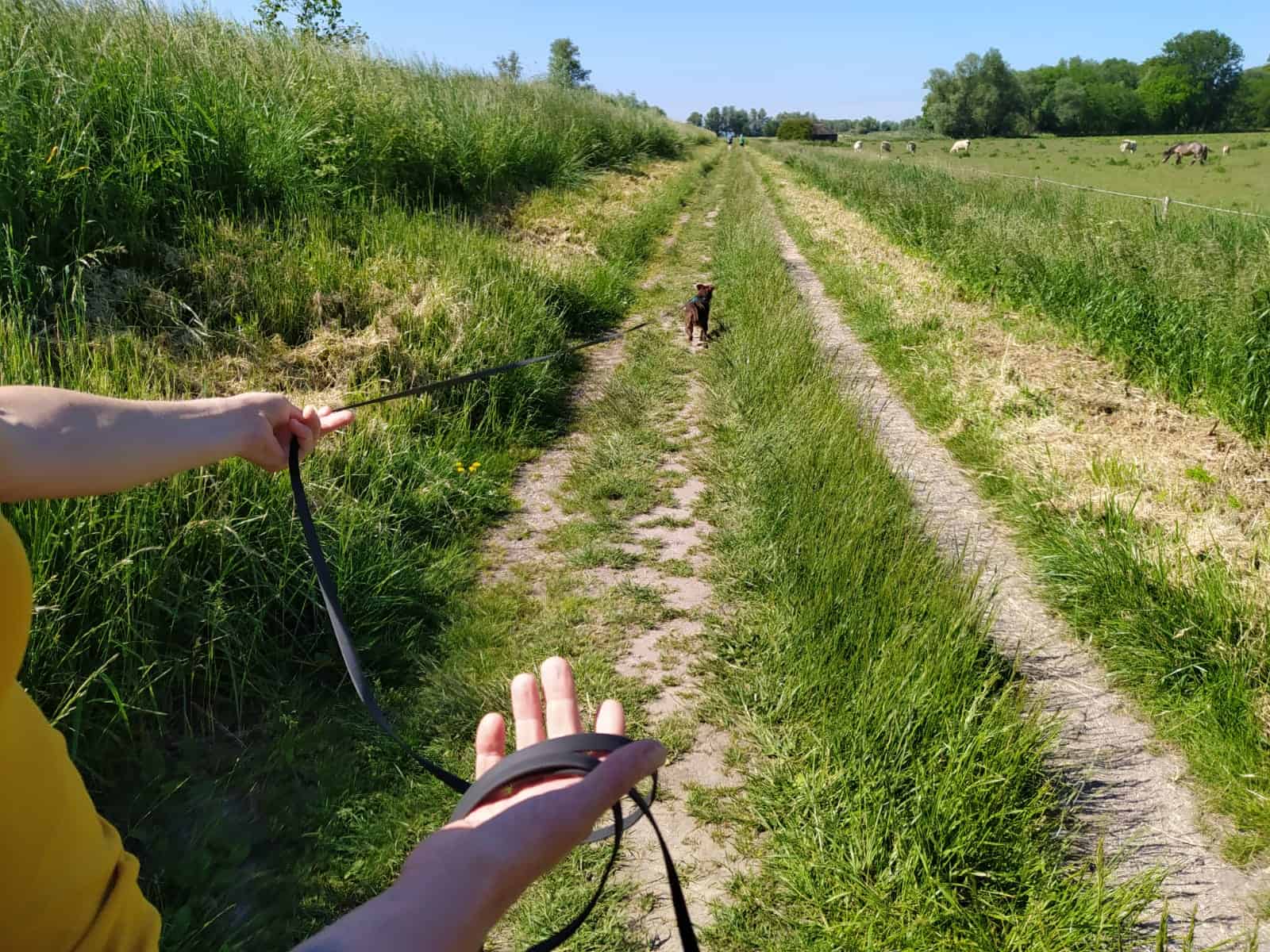
Keep sessions short, stop when the concentration runs out, and finish on a positive note with a treasure hunt. If your dog keeps pulling hard despite good application, there is probably something underneath (impulsivity, sensitivity to stimuli, something physical or hormonal) and you need a tailored approach. Useful extras: brake the leash between your fingers instead of stopping it abruptly, walk more slowly yourself, point out a different focus point with your body, and use a shock absorber between the harness and the leash.
From our practice
The question people ask most often when they first see the long leash is this one: “Ten feet sounds far too long, will my dog not pull even more?” The answer is the same every time: it is exactly the other way around. On a short leash the dog is constantly at the end of it and learns to pull. People who bring the old leash along the first few times just in case almost always switch over for good after a few walks. More than 30,000 dog parents have taken a Stressless Dogs course, and this is the change most of them notice first.
When to get help
Does your dog pull or hang differently than he used to, does he move stiffly, does he refuse to go on or refuse exercises he knows? Then have your veterinarian take a look first: pain causes stress, and pulling can relieve pain. If your dog lunges at dogs, cyclists or people, then pulling is a symptom of something bigger; start with Why does my dog lunge at other dogs? and get professional guidance.
Frequently asked questions
How long does it take before my dog stops pulling?
For most puppies it takes months to learn to walk relaxed on a leash, and unlearning the pulling in an adult dog often takes even longer. And pulling can never be ruled out completely: something can always happen.
Can I use a no-pull harness or a head halter?
No. A no-pull harness with a horizontal chest strap restricts movement, and a head halter or choke chain causes pain and teaches your dog to keep tension on the leash. They raise stress, and a stressed dog pulls more.
From what age can I practice this?
Up to about twelve weeks you are not really walking yet. After that you start with short walks of about fifteen minutes a day in a familiar place, adding roughly five minutes per month (how to build that up).
My dog only pulls on the way out. How does that work?
That is usually arousal: he wants to get somewhere. Look at the moment of going outside (harness on first, move calmly, no rush) and at what happened before the walk. A full stress bucket shows up in the first ten minutes.
Sources
Budzinski, C. and A. Dog Field Study, pulse study “At the heart of the walk”: 61 dogs, a 5 foot (1.5 meter) leash versus a 16 foot (5 meter) leash versus off leash; sniffing time and heart rate measured.
Read next
Harness, collar, head halter, choke chain or no-pull harness: the overview
Dog walking equipment compared: harness, collar, head halter and more
Do you know now why your dog pulls?
Then you can take the next step. In almost every pulling dog there is tension underneath, and he shows you that tension before the leash goes tight: a stare that lingers, a body that speeds up, a flick of the tongue. In our free webinar on communicating with your dog you learn to read those signals and a technique to guide your dog without using the leash.
Do you want to learn walking without pulling step by step, with the leash handling, the harness and the stress reduction included? That is the Stressless Communication Course.
Thank you for reading, on behalf of me and all the dogs.
Dog Behavior Consultant & Natural Dog Trainer