Fear periods in dogs: when do they happen and what do you do?
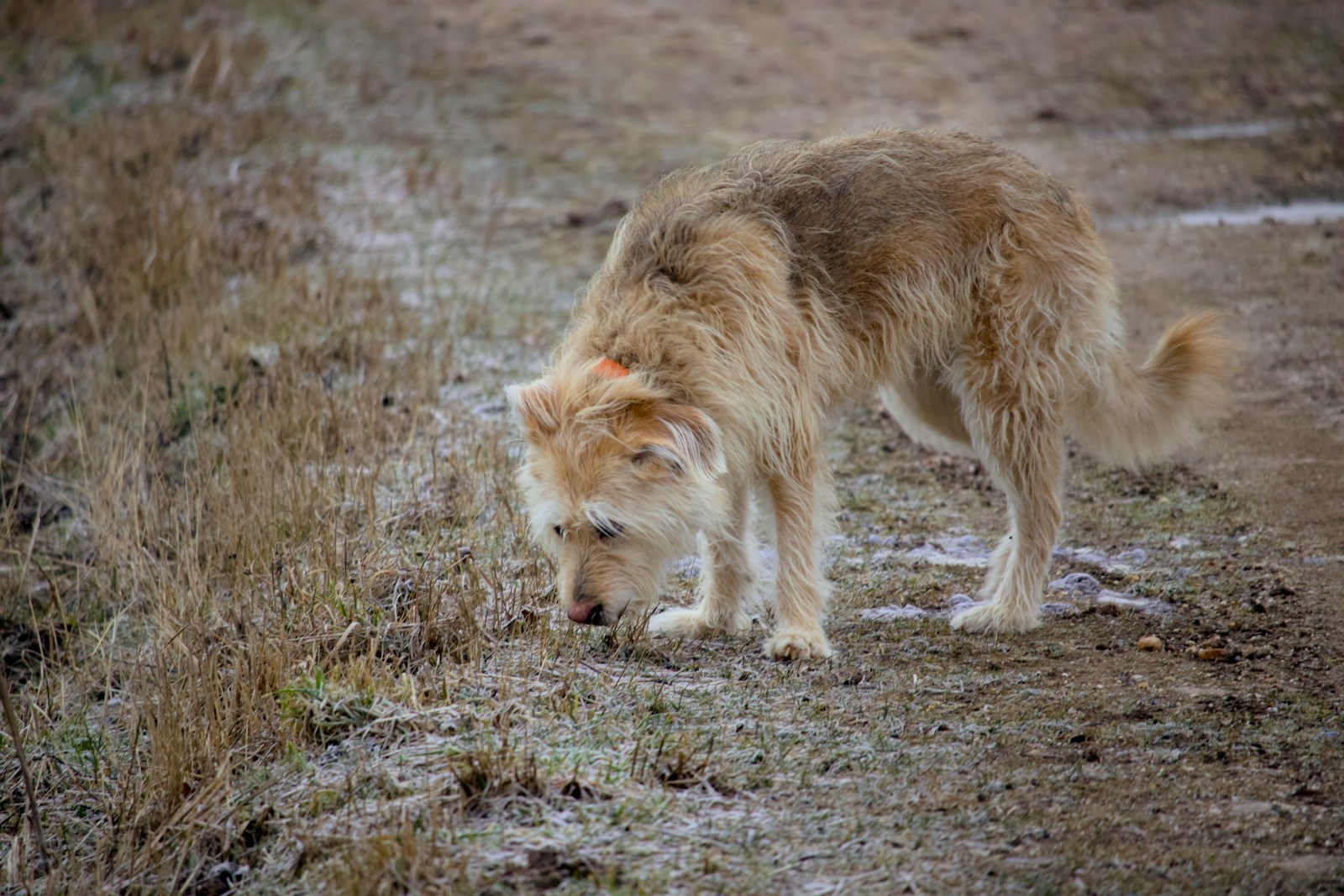
A dog fear period is a normal, healthy stage of development in which your puppy or young dog suddenly becomes more cautious, even around things he already knew, usually around 8 weeks, between 12 and 16 weeks, between 8 and 9 months, between 13 and 14 months and sometimes around 18 months. At Stressless Dogs we guide a dog through it with support, calm and nothing new, and we let the dog choose what he is ready to face.
A frightened dog almost always shows it before he starts barking or running away. Learn to read those signals in the free webinar.
In short
Every puppy goes through fear periods, and that is normal and healthy. How and when varies a lot from dog to dog.
The rough ages are around 8 weeks, between 12 and 16 weeks, between 8 and 9 months, between 13 and 14 months and sometimes around 18 months.
Fear shows itself through the four F’s: fight, flight, fiddle and freeze, in other words fighting, running away, acting silly or shutting down.
You can always comfort a frightened dog, because you cannot reinforce fear.
During a fear period, introduce nothing new, do not lure, and let your dog choose whether he approaches something.
When do dogs have fear periods?
A dog has several fear periods: a puppy fear period first, and adolescent fear periods later.
Age | Where your dog is in life | What to watch for |
|---|---|---|
Around 8 weeks | Usually still with his mother and littermates, or just moved | Ideally he goes through this period safely with the litter; we like to see a puppy move at 10 weeks or older |
Between 12 and 16 weeks | He is discovering the world outside, and teething starts around 3 months | At most one impressive activity a day, with quiet days in between |
Between 8 and 9 months | Adolescence has just begun | Introduce nothing new and do not lure |
Between 13 and 14 months | In the middle of adolescence | Calm and successful experiences, no forcing |
Sometimes around 18 months | Adolescence is heading toward its end | Patience: this period is temporary too |
In summary: fear periods come roughly around 8 weeks, between 12 and 16 weeks, between 8 and 9 months, between 13 and 14 months and sometimes around 18 months. The first ideally happens with the litter, the last three during adolescence. In every period, calm, support and postponing new experiences help.
How do you recognize a fear period?
You recognize a fear period by a dog who is suddenly more cautious than usual, often around things he has long known. A dog of about a year old who suddenly worries about traffic cones and road signs he passes every day is not being strange: that is normal.
Fear shows itself through the four F’s. Fight: he barks, growls or lunges. Flight: he wants to get away. Fiddle: he starts acting silly. Freeze: he shuts down and will not move forward. On top of that you see fear signals such as ears pinned back, the tail tucked between the legs, a low or crouched posture, avoiding eye contact or dilated pupils. Smaller signals often come first, such as lip licking, yawning or looking away. How to read those is in How do you recognize stress in dogs?
A puppy who was already potty trained can also slip back during a fear period; see When is a puppy potty trained? But not every change is a fear period. Teething from about 3 months makes a puppy more sensitive, a growth spurt from about 4.5 months can make him insecure, and pain makes any dog more tense. So always look for the cause first.
What do you do during a fear period?
You offer support, calm and safety, and you put new things on hold for a while. This is how you guide your dog through it:
Take your time and comfort him. Fear is an emotion, and you cannot reinforce an emotion. When you support your frightened dog, he learns that he can come to you when he is scared. If you do not, he finds his own way out: running away, or barking the scary thing away.
Introduce nothing new. Save new places and experiences for when he is back on steadier feet.
Do not lure. Luring with food is a form of forcing. In a fearful dog, it makes the fear grow.
Let him choose. If he wants to go over and look, go with him. If he wants to move away, move away with him. If he growls or freezes, increase the distance.
Do not get angry or impatient. A dog who is scared is not being difficult. He is having a difficult time.
Invest in successful experiences. Choose situations he can handle, so he notices more often that things turn out fine than that they go wrong.
You cannot get a dog used to everything that exists. That is why it pays to teach him how to deal with something new, so he gets through the next fear period on firmer ground. It is a skill you build step by step.
What mistakes make a fear period worse?
The biggest mistake is pushing through: what you guide well will pass, what you force can stick around. The pitfalls we see most often:
Socializing from a checklist. Too many new things can actually cause trauma. Then it is not socializing, it is traumatizing. Quality comes before quantity; see also How to socialize a dog.
Offering too much at once. More than one impressive activity a day, or lots of new things at the same time, switches on the self-protection mechanism.
Letting him figure it out alone. A frightened dog who gets no support finds his own way out: running away, or barking the scary thing away.
Punishing growling or barking. Growling is a warning. If you punish it, your dog learns to skip the warning. More on that in My dog growls: what is he saying?
A fear period passes on its own, but behavior that is rehearsed for months can turn into a learned habit. So prevent situations where he has to bark or run away again and again.
Is an adolescent fear period at 18 months still normal?
Yes, some dogs have one more fear period around 18 months. It falls at the end of adolescence, which runs from about 6 months to 18 to 24 months.
If your 18-month-old suddenly hesitates at something he did without trouble for months, guide him as in every earlier period: calm, support, nothing new, and letting him choose. What else goes on during adolescence, such as hormones and pulling away from his caregivers, is in Dog adolescence.
From our practice
One question we are asked a lot is at what age a puppy should come home. Most breeders choose 8 weeks; we like to see 10 weeks or older. By then your puppy has gone through his first fear period safely with his mother and littermates, and not in the middle of the biggest change of his life.
Daisy, who uses our approach in her own lessons, wrote on Trustpilot (March 16, 2026, 5 stars): “Great tips for dealing with a fearful, stressed dog and for building up his confidence and yours.” That is the heart of a fear period: not training the fear away, but letting the trust grow.
When to get help
Does the fear hang around for weeks and only make your dog more frightened, or does it tip into panic? Then have a welfare-focused behavior professional take a look, and never force a frightened dog to face his fear. If your dog bites or is genuinely aggressive, bring in a qualified behavior professional and do not practice on your own. If his behavior changes suddenly and dramatically, or he moves stiffly or limps, see your veterinarian first. A short checkup does not always rule out pain, so keep asking questions.
Frequently asked questions
Can I comfort my puppy when he is scared?
Yes, always. Fear is an emotion, not a behavior, and you cannot reinforce an emotion. Comfort actually lowers stress faster, and a puppy who gets support comes to you when he is scared, instead of running away or barking on his own.
How long does a fear period last in a dog?
There is no fixed length; it varies a lot from dog to dog. What we do know is that a fear period is temporary and passes on its own. The calmer you guide him through it, the smaller the chance that something sticks. If it lasts for weeks and gets worse, get help.
My young dog is suddenly barking a lot more. Could it be a fear period?
It could. In young dogs, more barking is sometimes a temporary phase, caused by adolescence or a fear period, that passes on its own. Do make sure it does not become a habit, and keep his surroundings predictable and calm. The different types of bark are explained in Why does my dog bark?
Should I stop socializing during a fear period?
You do not stop good experiences, you stop new and exciting ones. Walk in your own familiar area and save new places for later. Calmly watching the world from a distance is often enough during this phase, as long as your dog decides how close he gets.
Sources
American Veterinary Society of Animal Behavior. Position Statement on Puppy Socialization. On the socialization period of puppies.
Rugaas, T. (2005). On Talking Terms With Dogs: Calming Signals (2nd edition). Dogwise Publishing. The basis of the calming signals a dog uses to show that something is getting too much for him.
Read next
Dog adolescence: what changes and how you get through it together
How to Socialize a Dog: Why Friendships Work Better Than the Dog Park
Training a puppy without punishment: the four ways to guide behavior
How Do You Recognize Stress in Dogs? The Signs Almost Everyone Misses
A frightened dog tells you what he needs
A fear period is not a problem you have to fix. It is your dog letting you know that something is too much for him right now, with his ears, his tail, his eyes and sometimes his voice. Behavior is communication, and once you learn to read that language, you see the fear coming before he starts barking or running away. In our free webinar on communicating with your dog you see those signals on video.
Do you want to be guided step by step through the fear periods and the ups and downs of growing up, starting with the language your dog is already using? That is the Stressless Communication Course.
Thank you for reading, on behalf of me and all the dogs.
Dog Behavior Consultant & Natural Dog Trainer