Traveling With Your Dog: The 3 Most Important Tips
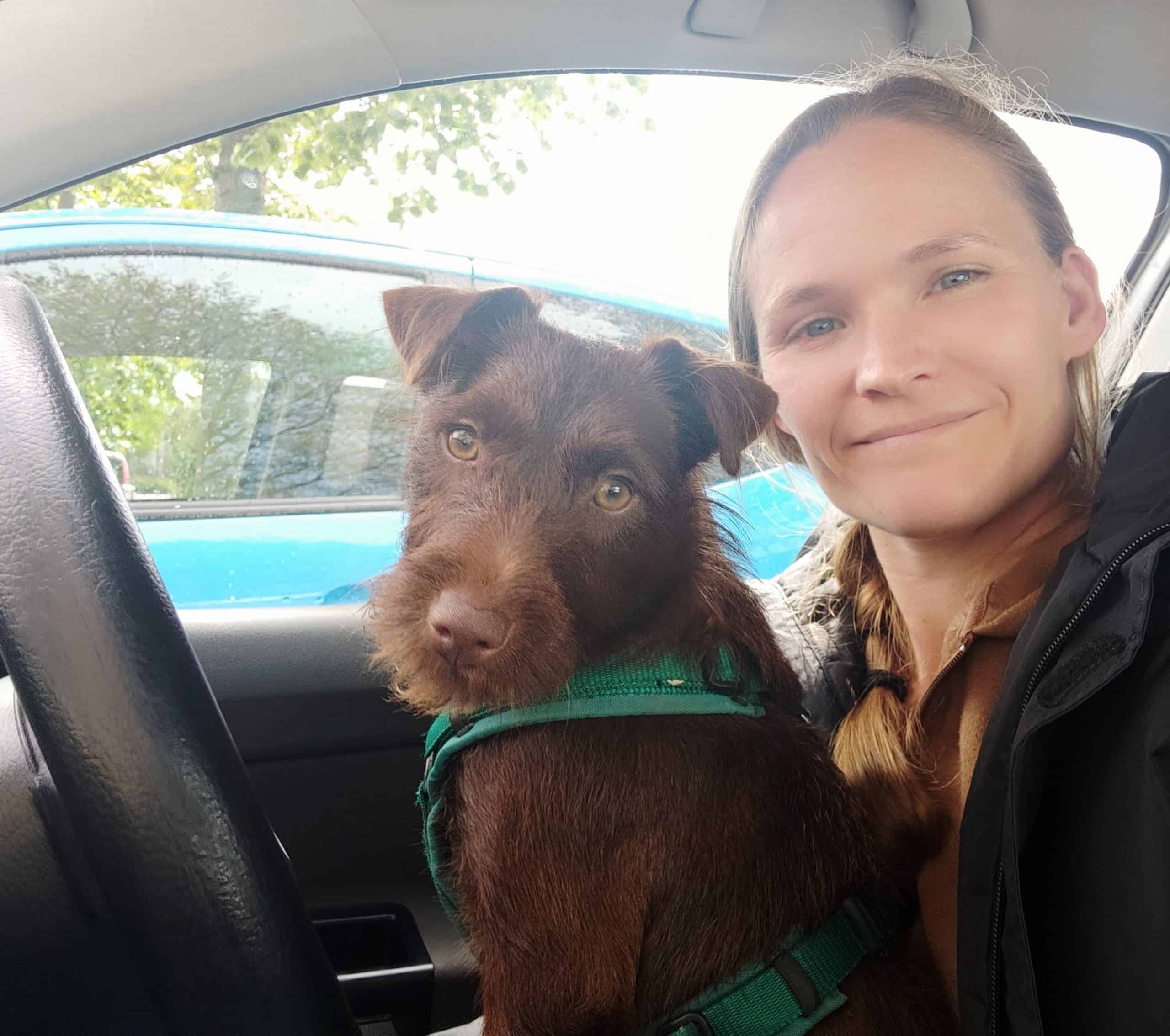
A relaxed trip with your dog starts with three things: bring the routines from home with you, let him sleep close to you if that is what he wants, and match your activities to what a dog can handle. For your dog, a vacation is not relaxation but a move: an unfamiliar place, different smells, none of the familiar objects, and an owner who suddenly behaves differently. Most dogs find that stressful, and you see that stress come out in following you around, sleeping badly, barking or being off. I wrote this article after our own few days away with Sophie, who was nine months old at the time and right in the middle of adolescence. It is still here, with the photos, because it shows exactly where things go wrong and what helps.
In short
On a trip, everything is different for your dog. Predictability and routine create calm and a feeling of safety.
Bring his bed, his toys and his bowls, and put them somewhere recognizable. Keep the feeding and potty schedule you use at home.
Dogs are social sleepers. Let your dog sleep in the bedroom if that is what he wants; in an unfamiliar place he needs that safety even more.
Busy city trips and tourist routes are fun for people and stressful for dogs. Choose nature, quiet small towns and breaks.
Leaving him alone in the vacation rental: preferably not. In an unfamiliar place, that is too much for many dogs.
Whether your dog is having a good time is written in his body, not in his tail. Learn to read it in the free webinar.
Our few days away with Sophie
The three of us (me, my partner Ernst-Jan and Sophie) went away for a few days. We were teaching Sophie step by step to be comfortable with a sitter, but we were not yet at the point where she could stay somewhere else for a few days. So we looked for a pet-friendly rental with a fenced yard where she could potter around off leash. We found that in a small cabin, and we enjoyed it enormously.

But there were challenges too. Sophie was nine months old, right in the middle of adolescence, and this was her first time coming along. We noticed that she was quite thrown off by the new place and everything around it. She was dealing with a fair amount of stress, and because of that so were we. Since I am probably not the only one who runs into this, I want to share how we made it relaxed anyway, for her and for ourselves.
Tip 1: keep the familiar routines
At home the two of you have your own routines and habits, which is how your dog understands what is going to happen. On a trip that is completely different: another place, the familiar objects and smells are gone, and you behave differently. You sleep in, you go to bed later, you do not have to go to work. You can help your dog by bringing as much of the predictability of home as you can, especially the things that matter to him.
What | At home | On the trip |
|---|---|---|
His bed with his blankets | A fixed spot in the living room | Bring it and put it in a comparable, quiet spot |
Food and water bowls | In the kitchen | In the kitchen of the rental as well |
Feeding and potty breaks | Fixed times: the highlights of his day | Keep the same times, even when you are sleeping in |
Leash and harness | On the hook by the door | For us: the coat rack next to the cabin’s front door |
His toys and chews | Familiar | Bring them; chewing is extra calming in an unfamiliar place |
In summary: bring his bed with his blankets, the food and water bowls, the leash and harness and his toys and chews, give them a comparable fixed spot in the rental, and keep the same feeding and potty times you use at home, even when you are sleeping in.
Tip 2: let your dog sleep near you if that is what he wants
For your dog, nights in a new place can be especially hard. Dogs are social sleepers by nature: they prefer to sleep in company, because sleeping together creates safety. On a trip, most dogs carry more stress because of all the changes, and therefore have more need for safety around them. Your dog finds that safety with you.
So give your dog the option of sleeping in the bedroom with you. Only when he feels safe can he relax and sleep well, and only when he sleeps well can he handle the difficult situations during the day. A dog who sleeps badly builds up even more stress: bad sleep creates more stress, and stress creates more bad sleep.
At home Sophie sleeps in the living room, but in the cabin we put her bed next to ours. She really needed that: she kept wanting to follow us and felt most comfortable close by. Once we were home it was no longer necessary and things went straight back to the way they were. So on this point you can happily deviate from your usual habits.
Tip 3: adapt your activities
Do you want to do a lot of tourist activities, go out, see cities and buildings? Then it is better for your dog not to come along on the trip. In that case find a suitable sitter or boarding option and spend plenty of time well in advance getting him used to it. Beyond that, assume that your dog cannot stay alone in the rental or the RV. In many places that is not allowed either, and for good reason: an unfamiliar place is already tense for your dog, and being left alone in that unfamiliar place can frighten him so much that he starts destroying things or barking non-stop out of that emotion. The chance of a complaint is high, and more importantly: your dog suffers.
You really do not have to sit indoors the whole time. Skip busy city trips with large crowds and long routes past the sights; that is fun for people and often flat-out stressful for a dog. What does fit: visiting a quiet small town, walking there and taking regular breaks, walks in nature, relaxing somewhere beautiful, a picnic or a quiet patio.

Can my dog stay alone in the vacation rental?
Preferably not, and certainly not in the first few days. A dog who is perfectly fine alone at home learned that in an environment he knows. In an unfamiliar place the stress bucket is already fuller, and being alone comes on top of that. If you do want to leave for an hour, build it up the way you would at home: first step out the door and come straight back, then a few minutes, and only if your dog stays relaxed. If you see yawning, tongue flicks, lying by the door, or if you hear whining, it is too much. How to read that line and how the buildup works is covered in How Long Can a Dog Be Left Alone? A dog with separation anxiety should not be left alone on a trip at all.
Every dog is different
Are you reading this and thinking, “Well Amee, my dog really is not like that”? That is possible. There are dogs who cope reasonably well with crowds. But keep in mind that you chose to bring a dog into your life, and that part of this species is that he does not like crowds. Your dog is happiest when he can do things that suit him. We sometimes enjoy things a dog would naturally stay well away from, essentially anything where a lot of people come together or where there is a lot of noise. It is worth asking yourself how necessary and how fair it is to take your dog along to that.
When to get help
If your dog panics on a trip when he is alone, barks non-stop or destroys things, that is not disobedience but fear, and it is not a reason to “try it one more time.” Arrange things so he is no longer alone, and tackle it at home; start with Separation Anxiety in Dogs. If your dog does not eat or drink for days, or shakes and pants without being hot, have a local veterinarian take a look.
Frequently asked questions
My dog is not eating on the trip. Is that a problem?
Eating less for a day in an unfamiliar place is normal: with tension, even digestion shuts down. Keep the fixed feeding times, offer the food calmly in his familiar spot and do not make an issue of it. If he does not eat for several days, go to a veterinarian.
Can I take my dog to a patio or a restaurant?
A quiet patio with breaks works well, especially when your dog has something to chew and is not lying in the walkway. A full, loud restaurant is too much for most dogs.
How do I keep the car ride calm?
Transport him safely: use a crash-tested harness with the seat belt, a crash-tested crate, or a cargo-area barrier, and never let him ride loose. On rides longer than an hour, plan a potty break, and if he finds the car tense, let him get used to it calmly first.
Do I have to stay home the whole vacation with my dog?
No. Choose activities that suit a dog: nature, quiet small towns, walks with breaks. And if your vacation mostly consists of crowds, a good sitter or boarding spot for your dog is the kinder choice.
Sources
American Veterinary Medical Association. Traveling with your pet FAQ. On bringing familiar items, getting used to the car in advance, and what to arrange before you leave.
Center for Pet Safety. Crash-tested pet travel safety research. On which harnesses, crates and carriers actually hold up in a crash test.
ASPCA. Separation Anxiety. On the signs of separation anxiety, never punishing, and building up in small steps.
Read next
Separation Anxiety in Dogs: Recognizing the Symptoms and What to Do
How to Recognize Stress in Your Dog: The Signals Almost Everyone Misses
More calm and more fun, together
There are still a lot of misunderstandings about dog behavior: what dogs naturally need, and how they let us know. By digging into that, you understand your dog better and you can help him better, on a trip and at home. Start with the free webinar Communicating With Your Dog: there you see the signals Sophie used in that cabin to tell us she found it tense.
Do you want the full course and the coaching from our team after that? That is what the Stressless Communication Course and our community are for.
Thank you for reading, on behalf of me and all the dogs.
Dog Behavior Consultant & Natural Dog Trainer